1801-1803: Matthew Flinders, Bungaree and Trim Circumnavigate Australia


Matthew Flinders (1774 - 1814) was an English explorer, naval officer and navigator from Lincolnshire, England, who became the first European person to circumnavigate Australia. 

Bungaree (born about 1775), a Kuringgai man from the Broken Bay area of New South Wales, who accompanied Flinders on the voyage, was described by Flinders as a "worthy and brave fellow". Also along for the ride was Flinders seafaring cat, Trim.
Portrait of Captain Matthew Flinders, RN, 1774-1814

Mapping Australia

On 18 July 1801, Matthew Flinders left Portsmouth, England, in HMS Investigator with the intention of exploring the "unknown coast" of Australia, which was known as New Holland at this time. 
Add caption

The Encounter

On 6 December 1801, Flinders arrived at the most south-westerly mainland point of the Australian continent, in the state of Western Australia and named it Cape Leeuwin, after the first known ship to have visited the area, the Dutch ship Leeuwin ("Lioness"), in 1622.

Continuing on, Flinders sailed along the southern coast of the Australian mainland, then stopped off at Oyster Harbour, Western Australia, where he found a copper plate that Captain Christopher Dixson had left there, only the year before, sailing on the Elligood. The plate was inscribed, "Aug. 27 1800. Chr Dixson, ship Elligood".

Whilst sailing off the coast of South Australia in 1802, Flinders came upon the French expedition, under the command of Nicolas Baudin, sailing Le Geographe. Although both expeditions believed that their countries were at war, both Flinders and Baudin as men of science discussed their findings before parting on good terms. Flinders and Baudin sailed in opposite directions and were never to meet again. Flinders did, however, name the bay in which they met, Encounter Bay.

Bungaree

Continuing along the coast, Flinders explored the site of the future city of Melbourne, before continuing eastwards, and reaching Port Jackson in May 1802. In that same month, Flinders recruited the Aboriginal man, Bungaree, who he described as having a "good disposition and open and manly conduct".

As Flinders finished the first complete map of Australia, proving that it was a single continent,  Bungaree acted as a mediator, with the indigenous people that the voyagers encountered, even though he did not share a common language with most of the other tribes.
Bungaree by Augustus Earle (1826)

Trim The Cat

Also on this voyage of circumnavigation around the Australian mainland, was Trim the cat. Trim was born in 1799 aboard the ship HMS Reliance, during a voyage from the Cape of Good Hope to Botany Bay. Flinders described the cat: "Trim as The sporting, affectionate and useful companion of my voyages during four years".
Bronze sculpture of Trim, on a windowsill of Sydney's Mitchell Library, was unveiled in 1997
Trim, the cat, in Donington, Lincolnshire. at the feet of his master, Matthew Flinders

How It Ends

The Investigator arrived back in Port Jackson in June 1803, after completing the circumnavigation of Australia.

On his return voyage to England, Flinders was accused of spying and imprisoned by the French in Mauritius. Sadly, Trim disappeared during Flinders's time in captivity.

Flinders returned to England in 1810, but he died one day after the publication of his great work, A Voyage to Terra Australis, in July 1814.

In 1814, Governor Lachlan Macquarie presented Bungaree with a brass breastplate and a large plot of land at George's Head, Port Jackson.

In January 1919, the grave of Matthew Flinders was found during excavations of a cemetery near Euston train station in London, as part of the HS2 high-speed rail project.


Books To Read


Matthew Flinders' Cat, by Courtenay, Bryce.

The Life of Matthew Flinders, by Miriam Estensen

Australia: When The Dinosaurs Lived Here


The Mesozoic era was the age of reptiles which occurred 250 to 65 million years ago. During this time, dinosaurs were the rulers of Australia. Humans did not exist.

Dinosaur Cove in Victoria, Winton in Queensland and Broome in Western Australia, are places where dinosaur remains have been found in Australia.

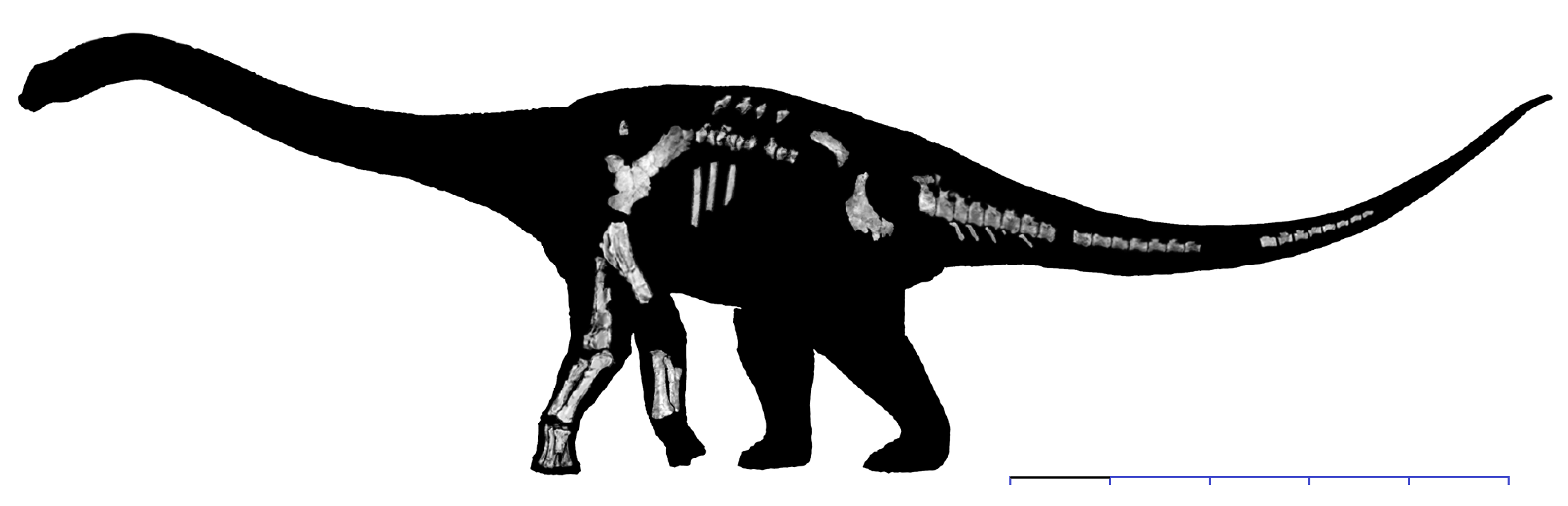
One of the biggest dinosaurs discovered in Australia was a giant sauropod nicknamed "Elliot", after David Elliot,  a sheep farmer who discovered the bones. 

Elliot, at 21 metres long, weighed as much as a jet airliner and was as high as a two-storey building. Elliot was a plant-eater and the rocks in which his remains were found, have been dated at 95 to 98 million years old. Strangely enough, these behemoths had beaks like those of birds or turtles.
Skeletal of Wintonotitan, Australian Age of Dinosaurs Museum of Natural History, doi:10.1371/journal.pone.0006190 — Image #2
Fossilized sauropod footprints on Broom Beach, WA.
A Sauropod femur at the Australian Age of the Dinosaurs Natural History Museum, Winton Queensland

Lightning Ridge Dinosaurs

Back in the 1980s, a miner named Bob Foster was working at the outback town of Lightning Ridge, where he kept finding things which looked like "horses' hooves". After finding and smashing these hoof-like specimens for a few months, Bob decided to travel to the Australian Museum in Sydney, where he was met with much excitement.


Bob had found a new dinosaur species, which was named Fostoria dhimbangunma. The four scapulae (shoulder blades), all from different sized animals, are the first dinosaur "herd" to be discovered in Australia.

Opalised skeleton of a dinosaur found in Coober Pedy (South Australia Museum)

Dinosaur Named Cooper

In 2004, a member of the Mackenzie family found a lump of rock which he thought might be a fossil, on their property, west of Eromanga in South West Queensland. The Queensland Museum determined the specimen was the fossilised remains of a 95 million-year-old plant-eating dinosaur. 

Since then, many dinosaur sites have been found on the property, including Australia’s largest dinosaur, a 95-98 million-year-old titanosaur, nicknamed Cooper, which has a long neck and tail and a massive body.
This photo is on the wall of the Eromanga Natural History Museum of the dinosaur nicknamed, Cooper, Australia's largest dinosaur, walking by the Royal Hotel

1796: Complaints About John Macarthur's Behaviour

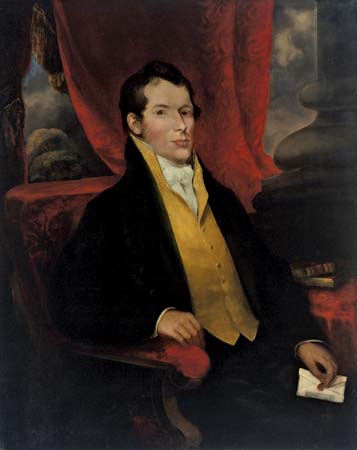
With the benefit of hindsight, it would appear that John Macarthur (1767 –1834) the wool pioneer, politician and rebel suffered from bipolar disorder.
Portrait of John Macarthur, wool pioneer in Australia., State Library of NSW

Steam Engine Power

Whist making such a claim about Macarthur's mental health hundreds of years after he has lived and died seems problematic, it is evident that Macarthur experienced cycles of "steam engine power" and periods of terrible depression. In 1832 he was declared insane and two years later, he died on 11 April 1834.
Drawing of the penal transportation ship "Neptune" that operated between England and Australia

On The Hellship

As a British army officer,  John Macarthur arrived on the hellship, the Neptune, with his wife Elizabeth, part of the Second Fleet, in New South Wales in 1790. 

Unlike the First Fleet which arrived in Sydney with a mortality rate of 5.4 per cent and which had largely been organised and administered by Arthur Phillip, the Second Fleet had been contracted out to a former old slave-trading company named: Camden, Calvert and King.

The Second Fleet became known as "The Death Fleet" as there was a 40 per cent mortality within six months of arrival in Sydney.  The words of the First Fleet’s Chaplain, Reverend Richard Johnson, described the scene of the Neptune's Sydney arrival:

“I beheld a sight truly shocking to the feelings of humanity, a great number of them laying, some half, others nearly quite naked, without either bed or bedding, unable to turn or help themselves.

“Spoke to them as I passed along, but the smell was so offensive that I could scarcely bear it…. The landing of these people was truly affecting and shocking; great numbers were not able to walk, nor to move hand or foot; such were slung over the ship side in the same manner as they would a cask, a box, or anything of that nature.

“Upon their being brought up to the open air some fainted, some died upon deck, and others in the boat before they reached the shore. Some creeped upon their hands and knees, and some were carried upon the backs of others.”

Fighting Duels

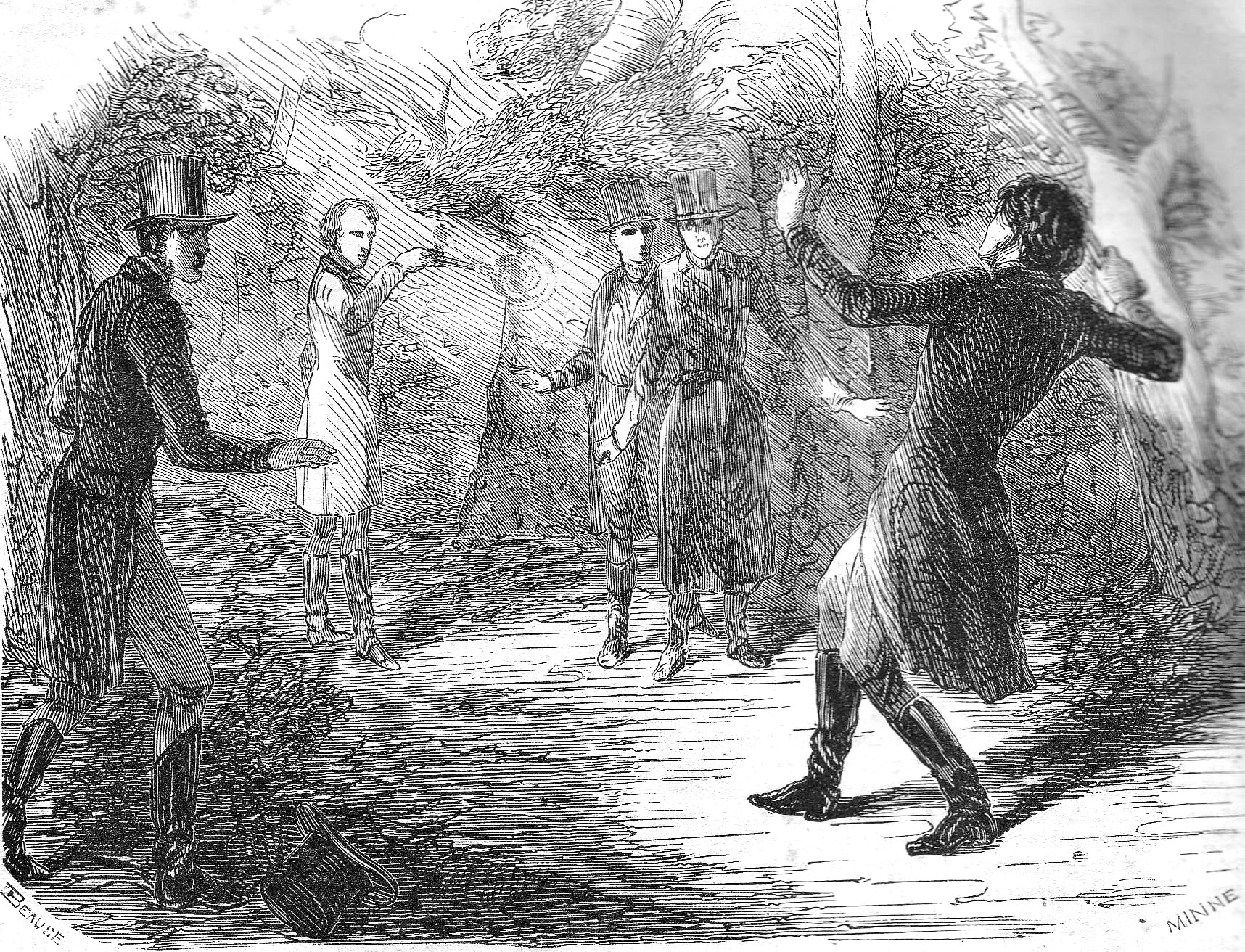
Before the Neptune, the "worst ship in the worst of Australian fleets" had even departed Plymouth, John Macarthur became embroiled in various disputes. One of these disputes was his fighting a duel with Captain Gilbert, the Master of the Neptune. The pair met at the Fountain Tavern, Plymouth Docks and fought a bloodless duel. 
Two protagonists clash gun before three witnesses
It must be said in Macarthur's defence that the Neptune would become famous as a hellish death ship and he was travelling in cramped conditions with his pregnant wife and young child, to the other side of the world. 

Soon afterwards, Macarthur fought another duel with Captain Gilbert's successor, after which, Macarthur transferred his family to another ship, the Scarborough.

In NSW, Macarthur was appointed paymaster and Inspector of Government Works and Francis Grose granted Macarthur large areas of land, including the land on which Macarthur and his wife established Elizabeth Farm at Parramatta.
Elizabeth Farm, Rosehill, NSW, built 1793

The Great Perturbator

But Macarthur was developing a reputation as being outspoken and argumentative.

Macarthur was challenged to another duel, this time by surgeon and landholder, William Balmain, in February 1796. 

Balmain called Macarthur a, "base rascal and an atrocious liar and villain", after Macarthur had become incensed when Balmain had given advice in his role as a magistrate, to John Baughan, whose house had been wrecked by soldiers of Macarthur's company of the New South Wales Corps.

Then things got worse when Macarthur became involved in a dispute with the Judge-Advocate, Richard Atkins, who Macarthur declared "a public cheater living in the most boundless dissipation". For various reasons, Governor Hunter passed over Macarthur's complaints and sided with Atkins. 
Captain John Hunter, Governor of New South Wales, 1801. State Library of New South Wales
So, Macarthur became involved in a campaign alleging that Governor John Hunter’s administration (1795-1800) was ineffective and trafficking in rum. Which led to Governor Hunter being recalled to England to defend these charges and his reputation.

After 1796 Macarthur, known as "the great perturbator", continued to be at the centre of complaints. Or in the words of Governor King "sowing discord and strife". 

In 1801, Macarthur tried to organise a social boycott of Governor King, but Colonel Patterson refused to boycott the governor, which resulted in Paterson challenging Macarthur to a duel in which Paterson was severely wounded in the shoulder.

Rum Rebellion

In 1808 Macarthur was a lead agitator in the Rum Rebellion, which led to the NSW Corps, led by Major George Johnston, overthrowing Governor Bligh in a military coup on 26 January. Macarthur served as Colonial-Secretary in the rebel administration, until he was removed by Governor Macquarie.
The arrest of Governor Bligh, 1808, artist unknown, watercolour drawing, Attached to the left hand wall in the image is a sheet with text, "O what can the matter be", Mitchell Library, State Library of New South Wales

Macarthur who is often remembered as a pioneer of the Australian wool industry, along with his indomitable wife Elizabeth, was a complex character. He is described as having a magnetic personality and a sense of his superiority. He could be unscrupulous and yet, undoubtedly, he possessed talent and drive. Sometimes too much drive, which became mania. 
Elizabeth Macarthur (1766-1850) State Library of NSW
John Macarthur was confined in this room as he became more mentally ill
In the end, Macarthur went mad. He became "so wild and incoherent" and was thought to be "completely deranged" as he experienced paranoid delusions involving his sons. 

John Macarthur died in April 1834, aged 65. He buried at Camden Park.


Books To read


Bedlam at Botany Bay, by Dr James Dunk - a book about mental illness in the early NSW colony.

The Timeless Land, Eleanor Dark - historical fiction about the European settlement and exploration of Australia.


1795: Bennelong Returns From a Visit To England

Woollarawarre Bennelong (1764 – 1813), after whom Bennelong Point in Sydney is named, was an Aboriginal man who is often described as a friend of the British in the colony's early days. However, Bennelong was probably playing a canny political game.

It is evident, however, that Bennelong and Governor Phillip did share a special friendship. So when Phillip returned to England in 1792, Bennelong, who had learnt to speak English, accompanied him, along with another Aboriginal man named Yemmerrawanne, onboard the Atlantic.

Whist in London, Bennelong and Yemmerrawanne stayed with Henry Waterhouse, a British Naval Officer, at 125 Mount Street, Mayfair. However, Yemmerrawanne became ill with a chest infection and so, the pair moved to the residence of Edward Kent, at South End, Eltham, in the county of Kent.

Whist in London, Bennelong and Yemmerrawanne were provided with fashionable clothes suitable to the London scene. It is said that they were presented to King George III (contested) and that they visited many London attractions like the Tower of London, museums, St Paul's Cathedral and theatre performances.
An undated portrait thought to depict Bennelong, signed "W.W." now in the Dixson Galleries of the State Library of New South Wales

A natural Comedian

It was reported in the London Observer, of Bennelong and Yemmerrawanne:

[T]hey seem constantly dejected, and every effort to make them laugh has been for many months ineffectual.

Bennelong who has been described as a natural comedian, afterwards seemed to have a return of good humour, as he is recorded as joking about experiencing the lack of his three wives, left back in Australia, with a reporter from the Oracle.

One of them, a very merry fellow, says, he regrets nothing so much as the inconvenience he finds in the absence of his three wives, for whom he had not yet been able to find a substitute in this country.

Sadly, Yemmerrawanne would die on the 18th of May 1794, in Kent, far from home. Bennelong is described by Captain John Hunter as being "broken in Spirit".
Yemmerrawanne's grave marker, St John the Baptist Churchyard Eltham, Royal Borough of Greenwich, Greater London, England

Home Again

After being away from home for two years and 10 months, Bennelong arrived home 7 September 1795 on the HMS Reliance. In the following year, in a letter dictated by Bennelong, probably to his friend, the former, Governor Philip: "Not me go to England no more. I am at home now"

Bennelong died at Kissing Point on 3 January 1813 and he was buried in the orchard of his other close European friend, brewer James Squire, along with his last wife, Boorong.

1793: Spanish Expedition Arrives in the Colony

The Royal Spanish Navy ships, Descubriete and Atrevida commanded by Captains Alejandro Malaspina and Jose Bustamante arrived at Port Jackson in March 1793.

This scientific and political expedition, modelled on the voyages of James Cook, was the important scientific voyage ever undertaken by Spain and the first foreign delegation to visit the infant colony.

Malaspina made many comments and observations in his Journal of the Voyage by Alejandro Malaspina, about the fledgeling colony, the convicts, the British and the Aboriginal people. Many of them not of a complementary nature.
Image of the Malaspina Expedition (1789–1794) — at the island of Samar, the Philippines. 1875 drawing by Fernando Brambila

Plan to Destroy Sydney

He not only wrote of being approached by the colony's prostitutes and “easy women”, but according to Spanish naval documents found by Chris Maxworthy, from The Australian Association for Maritime History, a detailed military plan was devised to destroy the Sydney British colony.

Three years later, the planned invasion became a possibility, when war between Britain and Spain looked likely, as King Carlos IV of Spain believed that the British could cause "great harm" to Spain's colonial interests. Bustamante wrote to the Spanish government about the Sydney colony.

"The entirely helpless state in which I observed that settlement in 1793, and the general discontent of its inhabitants, would so facilitate its conquest that I believe it would be achieved with the surprise that the convincing presence of our fleet would cause. But even if some resistance were offered, it could never triumph over the gunfire from our ships or prevent the total destruction of houses, warehouses and goods located in the principal settlement.”

The plan was to attack Sydney from the Spanish colonies in South America, with a fleet of 100 medium-sized boats armed with cannons and "hot shot" cannon, that involved firing heated shots, that could set fire to ships or buildings.

Bustamante proposed that after defeating the British at Sydney, the entire population of about 7000 prisoners, from Sydney and Norfolk Island, could be sent to South America to build the Spanish colonies.


Books To read


The Birth of Sydney, by Tim Flannery.

Leviathan: The Unauthorised Biography of Sydney by John Birmingham.

1770: Captain Cook Claimed The East Coast of New Holland

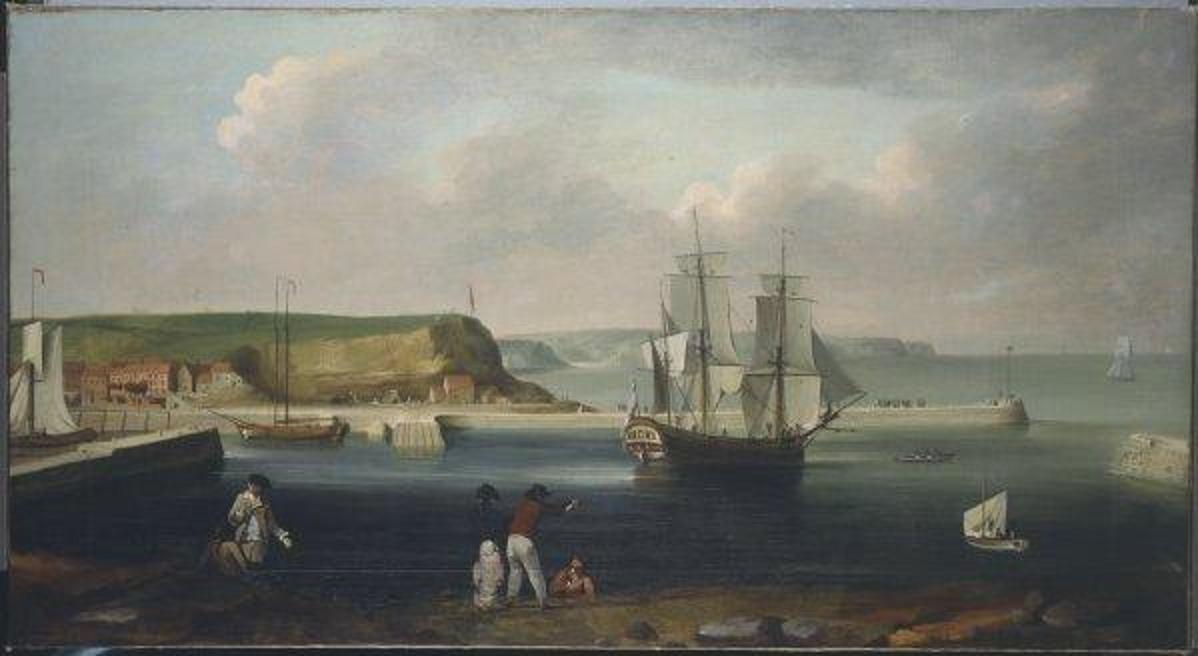
The British navigator and explorer, Lieutenant James Cook, departed England in July 1768,  onboard the HMS Endeavour. Cook and his crew were headed toward the South Pacific Ocean, on his first voyage, to observe the 1769 transit of Venus at Tahiti and perhaps, find the "unknown southern land" (Terra Australis Incognita).
Earl of Pembroke, later HMS Endeavour, leaving Whitby Harbour in 1768. By Thomas Luny, dated 1790
Europeans already knew about the existence of New Holland (Australia), named by the Dutch seafarer Abel Tasman in 1606, as 180km of Western Australia's south-west coast had already been mapped by the Dutch ship Leeuwin in 1627.

Many Europeans, including the British, thought that another larger Terra Australis (South Land), should exist in addition to New Holland, as it had been believed since antiquity, that the landmass of the Northern Hemisphere, should be balanced by land in the south. 

Cook's journey to the other side of the globe, across thousands of miles of ocean, navigating in uncharted and unknown waters, is often compared to astronauts going to the Moon or Mars. This is well expressed by Cook, who later wrote, "Ambition leads me not only farther than any other man has been before me, but as far as I think it possible for man to go".

After spending six months charting the New Zealand coast, Cook and his crew set sail into open sea, on 1 April 1770, sailing west toward New Holland.

The Endeavour first sighted the east coast of Australia at Point Hicks on 20 April 1770 and on the 29th April, Cook and his crew became the first Europeans to land on the east coast of Australia, at what Cook called Stingray Harbour, later, Botany Bay. The Endeavour then headed north charting the east coast.
Landing of Captain Cook at Botany Bay, 1770, E. Phillips Fox

Lively Eyes

Whilst observing the Aboriginal inhabitants of New Holland, the official botanist, Joseph Banks wrote: "Their eyes were in many lively and their teeth even and good" and “They were all of them clean limn’d, active and nimble. Cloaths they had none, not the least rag, those parts which nature willingly conceals being exposed to view compleatly uncovered”.
Daguerreotype photograph (circa 1847) described as "Group of Koorie men" by the National Gallery of Victoria
On June 10, the Endeavour struck the Great Barrier Reef, almost coming to grief and resulting in severe damage to the ship. After repairs were carried out, the Endeavour rounded Cape York, stopping at Possession Island in the Torres Strait on 22 August, which Cook later claimed in the name of King George III, naming it "Possession Island". This ceremony probably did not occur.

The Endeavour then returned to England, after having circumnavigated the globe and venturing further south than had ever been done before.
Endeavour replica in Cooktown harbour, QLD, Australia


Books To Read

Captain Cook: Master of the Seas, Frank McLynn

Talking to My Country, Stan Grant

Banished beyond the seas, By Sue Cox

1629: A Shipwreck and Mass Murder Off Australia


The Dutch vessel, the Batavia, left Holland on her maiden voyage bound for the Dutch East Indies (today's Jakarta, Indonesia) ), on the 27 October 1628. There were 322 people on board and a wealth in silver coins and jewels.
Replica of the Batavia, during the filmshooting of De Scheepsjongens van Bontekoe, Ad van der Zee

Plots and Piracy

The commander of the ship, Francisco Pelsaert, worked for the Dutch East Indies Company, but he did not know that Jeronimus Cornelisz, who also worked for the company and the ship's skipper, Ariaen Jacobsz, were plotting to mutiny and seize the Batavia, for piracy, and to steal all its precious cargo.
Rijksdaalder silver coins from the Batavia (1629) wreck. This part displayed in Geraldton Museum, Guy de la Bedoyere

Shipwrecked

Before the conspirators could engage in this mutiny, the Batavia struck Morning Reef near Beacon Island, just off the coast of Western Australia.

Forty people drowned, but the rest of the passengers and crew managed to make it safely to nearby islands, in the ship's longboat and yawl. But it soon became apparent that there was a lack of safe drinking water on the islands.

Pelsaert, Jacobsz and some other crew members took the longboat and set off to find water. And even though they did find water, they did not return to the survivors of the shipwreck, but arrived at the island of Nusa Kambangan in Indonesia, 33 days later.

Meanwhile, back on the island, Cornelisz was in charge of the survivors. But he still had dreams of piracy and delusions of grandeur, and so, he decided to get rid of any possible challengers to his despicable plans. These people, mostly soldiers, were taken to islands further away in small boats and instructed to look for water, and, as part of the cunning plot, left there to die without food. 

Murder

Then began the ruthless killings, which were planned with great care, with the most hardy and strong people being murdered and buried at night. Some were thrown off rafts to drown and others, had their throats cut, and in one case, beheaded. 
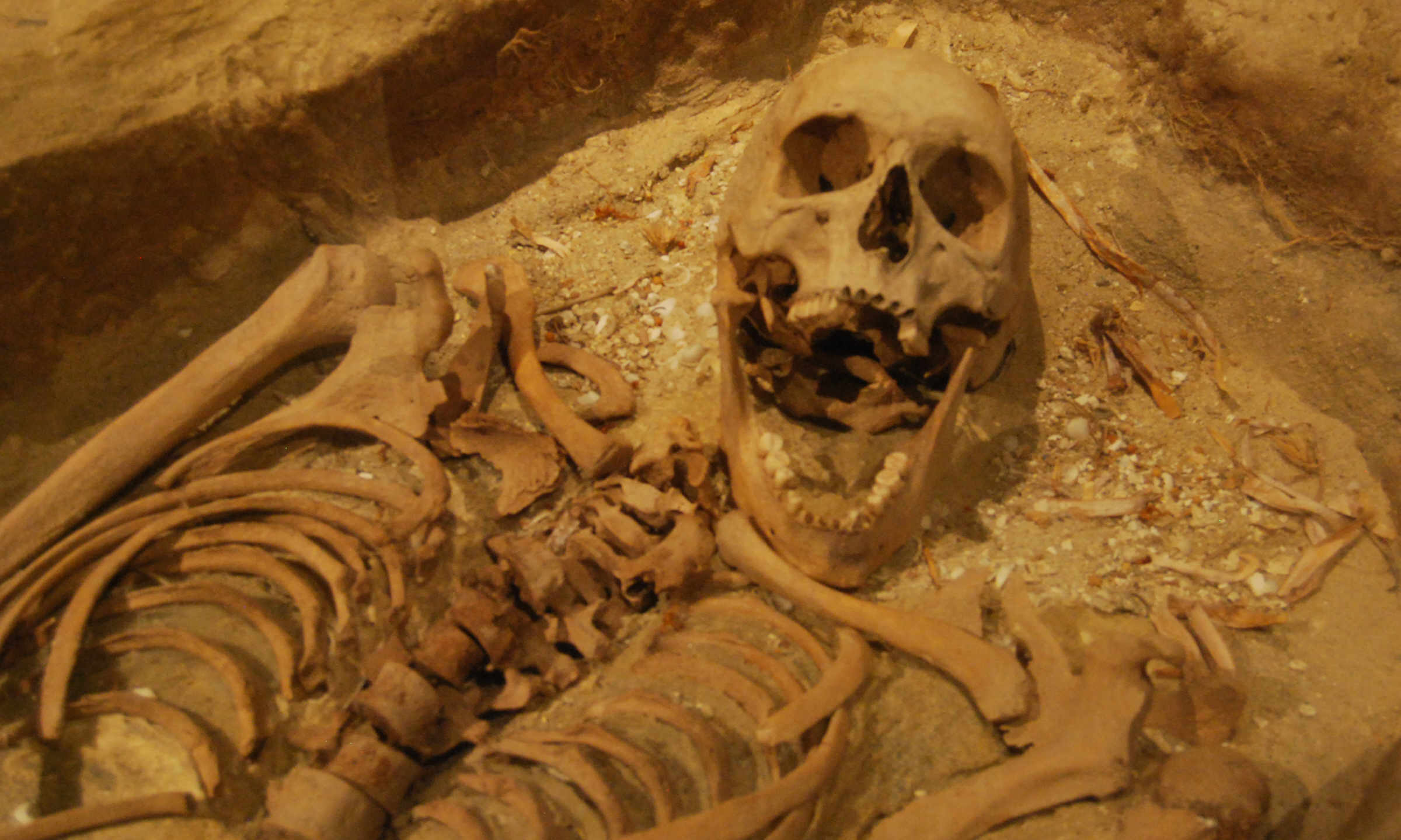
One of the Batavia mutiny (1629) victims, excavated on Beacon Island and now displayed at Fremantle Shipwreck Museum, Guy de la Bedoyere
A group of women was kept aside and used for the "common service" of these mutineering men.

Cornelisz ordered his twenty or so, fellow mutineers, to carry out killings of at least 110 men, women, and children. Cornelisz was only directly responsible for trying to poison and then, strangling, a baby. 

The soldiers, led by Wiebbe Hayes, who had been left to die on the nearby island, had managed to find water and food, but they didn't know about the scenes of horror taking place under the direction of Cornelisz until informed of the butchery by other survivors fleeing the massacres.

Attack

Cornelisz decided to attack the soldiers after he heard that they had found water and food sources. But the soldiers were prepared, as they had built forts and fashioned weapons and they managed to defeat the mutineers in several battles, eventually taking Cornelisz hostage.

The mutineers retreated and then attacked again, but Wiebbe Hayes and his men prevailed. Amazingly, at this point, a rescue ship carrying Pelsaert arrived and Cornelisz was handed over.

Cornelisz’ men did not surrender until Pelsaert threatened to sink their boats. Then a trial was conducted. However, as Dutch law required the confession of a crime before execution, the men were interrogated and tortured until they signed confessions. Cornelisz had to be tortured five times before he confessed.

Justice Served

Seven of the mutineers were hanged, some had their hands cut off before hanging, and two of the youngest, Wouter Loos and Jan Pelgrom de Bye, were sentenced to be marooned on the Australian mainland. This made them the first Europeans to permanently live on the Australian continent. They were never seen again.
The Batavia shipwreck (1629) stern internal timbers as displayed at Fremantle Shipwreck Museum, Western Australia. Guy de la Bedoyere


Star Trek and Captain Cook

Captain Kirk of Star Trek is based on Captain James Cook, the explorer. Furthermore, the USS Enterprise was named after Cook's ship, the...